

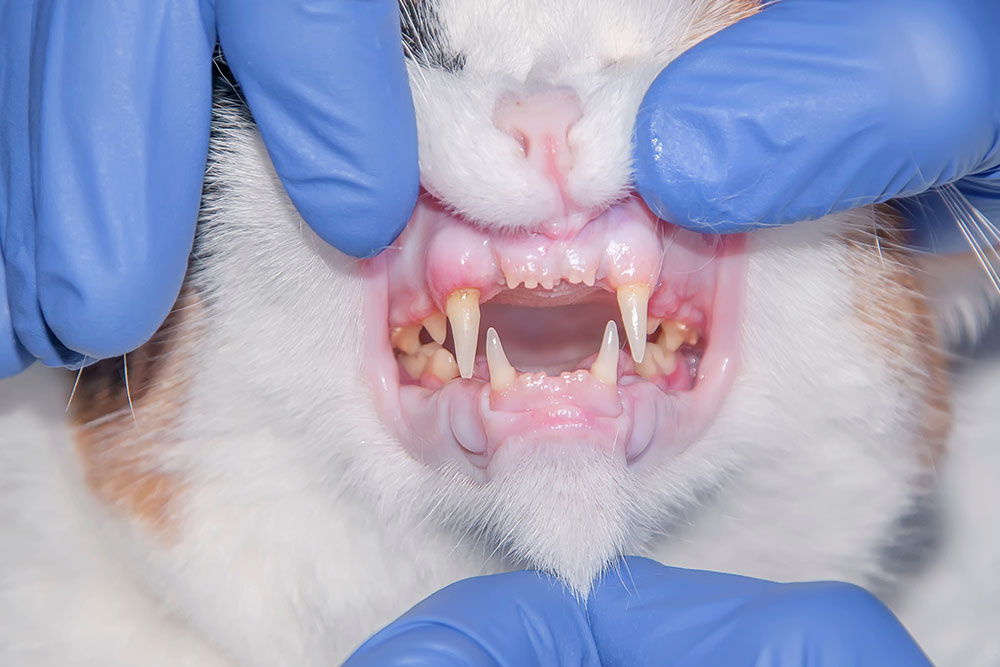
Cats are exceptionally skilled at masking discomfort, which means by the time something looks obviously wrong, it has usually been building for a while. The early signs of oral pain tend to be subtle: hesitating at the food bowl, then walking away without eating. Dropping kibble mid-chew. Drooling more than usual. A coat that looks increasingly rough and unkempt because grooming has become too painful. Hiding more. Reacting when touched near the face. These behavioral shifts are easy to attribute to aging or pickiness, but they often point to something more serious.
Feline stomatitis is one of the most painful oral conditions cats experience, and it deserves prompt evaluation rather than a wait-and-see approach. At Peak Pet Urgent Care in Reno, we are open seven days a week for exactly these situations. Whether your cat needs urgent stabilization or a thorough workup, our team is equipped to help. Contact us or walk in any day of the week to get your cat evaluated.
What Is Feline Stomatitis, and How Does It Develop?
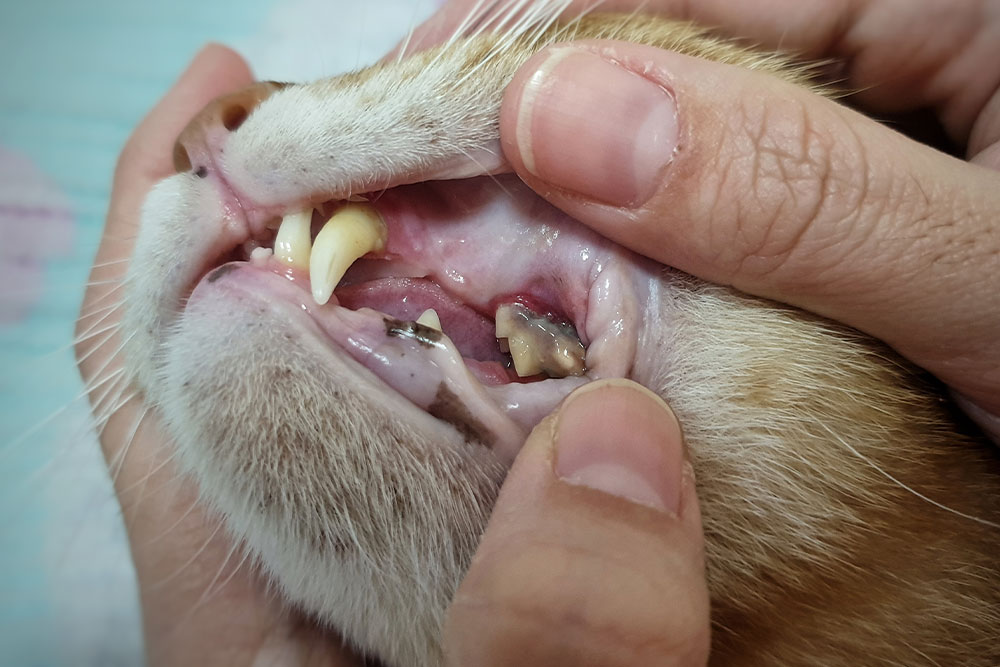
Feline chronic gingivostomatitis (FCGS) is not ordinary gum disease. It is a condition in which the immune system mounts an exaggerated, disproportionate inflammatory response to normal substances in the mouth, most often plaque bacteria, but sometimes viral antigens as well. The resulting inflammation is widespread, affecting the gums, inner cheeks, the tissue at the back of the throat near the palatoglossal folds, and often the entire mucosal lining of the oral cavity.
The exact cause is not fully understood, which is part of why treatment must be individualized. What is clear is that feline calicivirus and herpesvirus are frequently found in affected cats and are believed to contribute to the abnormal immune response. This is not a condition that improves with time or resolves on its own. Without appropriate intervention, it progresses. Our diagnostics and in-house laboratory give us the tools to assess what is driving the inflammation from the first visit, including viral testing for feline calicivirus, feline herpesvirus, FeLV, and FIV, since viral status directly influences the disease course and prognosis.
Signs and Symptoms of Stomatitis in Cats
Signs of Oral Pain You May Notice at Home
Because cats conceal pain so effectively, these signs tend to develop gradually and are easy to dismiss as aging or personality changes. Each one is a reason to schedule a veterinary visit rather than a reason to wait:
- Decreased appetite or refusing to eat entirely
- Weight loss over weeks or months
- Excessive drooling, sometimes tinged with blood
- Pawing at the face or rubbing the mouth on surfaces
- Dropping food or chewing only on one side
- Crying out when yawning or opening the mouth wide
- Approaching the food bowl and then backing away without eating
- A coat that looks rough or unkempt from reduced grooming
- Increased hiding, irritability, or withdrawal from normal social behavior
Weight loss in a cat with stomatitis is not about being finicky. It reflects pain severe enough to override a basic survival drive. Regular preventive exams catch early mucosal changes before they reach that point, which is exactly why staying current on wellness care matters.
What the Veterinary Exam Reveals
A complete oral examination in a cat with suspected stomatitis typically requires sedation or anesthesia, because opening the mouth is extremely painful for affected cats. Under proper visualization, the team assesses the degree of mucosal inflammation and ulceration, the condition of the gum tissue, whether proliferative lesions are present in the back of the mouth, and whether lymph nodes under the jaw are swollen. This level of evaluation is simply not possible in an awake, painful cat, which is one reason stomatitis is often more advanced than expected when finally examined.
Is It Stomatitis or Something Else?
Periodontal disease targets the tooth-supporting structures directly, including the bone, ligaments, and gum attachment around specific teeth. Stomatitis spreads throughout the entire oral cavity, well beyond what standard gum disease affects. Many cats have both conditions simultaneously, which makes diagnosis more complex and underscores why complete diagnostics matter from the start.
Full-mouth dental radiographs are essential for assessing root integrity, bone density, retained fragments, and any underlying structural problems that could perpetuate inflammation even after treatment begins. In cases where oral lesions appear unusual or asymmetric, oral cavity tumors must be ruled out before proceeding, since they can look remarkably similar to severe stomatitis but require an entirely different management approach. Biopsy and histopathology provide the definitive answer in uncertain cases.
Treatment Options for Feline Stomatitis
Can Medication Alone Manage Feline Stomatitis?
Medical management is appropriate for stabilization and for the period immediately following diagnosis. It typically includes anti-inflammatory medications, antibiotics, pain management, and sometimes antiviral medications or supplements to address viral involvement. Soft, palatable food makes eating more tolerable during active flares, and in severe cases where a cat has not eaten for days, a temporary feeding tube ensures adequate nutrition while a longer-term plan is developed.
The honest reality is that medication controls symptoms temporarily but does not address the root problem. The immune response driving the inflammation is still present, and the teeth provide a continuous source of the bacterial antigens that trigger it. Medical management tends to become less effective as disease progresses, and prolonged corticosteroid use carries its own health risks that can reduce the likelihood of a good surgical outcome later. Medication is rarely a permanent solution.
Full-Mouth Extraction: The Primary Treatment for Feline Stomatitis
The rationale for surgery is straightforward: by removing the plaque-retaining surfaces that trigger the immune response, the primary source of inflammation is eliminated. Full-mouth tooth extraction combined with thorough tissue debridement consistently produces the best long-term outcomes. Studies show that 60 to 80 percent of cats experience substantial improvement or complete resolution after full-mouth extraction, with the highest success rates in cats treated earlier in the disease course.
Two details are critical for surgical success: completeness of tooth removal and radiographic verification. Any retained root fragments maintain the same antigen load as intact teeth and can perpetuate inflammation indefinitely. Post-extraction radiographs confirm that nothing has been left behind.
What If My Cat Doesn’t Respond to Surgery?
Some cats continue to have significant inflammation after full-mouth extraction, particularly those with active calicivirus involvement or a long history of medical management prior to surgery. Newer approaches are expanding the options for these more complex cases:
- Adipose-derived mesenchymal stem cell therapy uses fat-derived stem cells to modulate the immune response rather than simply suppress it, and has shown meaningful results in cats who did not respond to traditional approaches
- MSC secretome is a cell-free injectable preparation of the bioactive factors that stem cells naturally produce, which is easier to standardize and store than live cell therapies
- Cryotherapy uses extreme cold to treat affected oral tissue and can range from providing temporary pain relief to achieving more lasting resolution depending on the patient
- Advanced antiviral and immunomodulatory combinations for cats with confirmed viral involvement
If your cat is in that group that has not responded fully to surgery, there are still meaningful options. We can discuss which approaches are most appropriate based on your cat’s individual history and viral status.
What Recovery Looks Like After Full-Mouth Extraction
The question we hear most from families considering this surgery is some version of “how will my cat eat without teeth?” The answer, consistently, is: better than before. Cats naturally bolt their food rather than chewing it extensively, and most cats with stomatitis were eating poorly or not at all before surgery. After healing, the vast majority eat with more enthusiasm than they had shown in months, because the constant pain has been resolved.
Here is what to expect in the post-operative period:
- Prescription pain medication for several days to weeks following surgery
- Antibiotics to reduce the risk of infection at extraction sites
- Soft food during the healing period, typically two to four weeks
- Follow-up exams to monitor surgical sites and confirm no retained root fragments are causing continued inflammation
- Medication adjustments as needed based on individual progress
Long-Term Prognosis: What Influences Outcomes?
Early intervention consistently produces the best results. The factors that most influence long-term outcome are:
- Duration of disease: longer disease history before surgical treatment is associated with a less complete response
- Completeness of extraction: retained root fragments are a leading reason inflammation persists after surgery
- Viral status: active calicivirus infection may extend recovery and require ongoing management
- Individual immune response: some cats will need long-term anti-inflammatory therapy even after successful extraction
Even cats requiring ongoing medication typically experience a significant reduction in pain and inflammation after surgery. Most return to eating comfortably, maintaining healthy weight, grooming themselves, and engaging with their households without signs of distress. The quality of life improvement is often dramatic, and it is one of the more rewarding conditions to treat because the difference is so visible.
Maintaining Oral Health in Cats Without Stomatitis
Dental health is central to a cat’s overall quality of life, and consistent at-home habits alongside professional care help prevent significant dental disease and catch early problems before they progress. For cats who tolerate it, regular brushing with an enzymatic toothpaste formulated for cats provides the most direct plaque control. For cats who resist brushing, lower-stress alternatives include water additives, dental powders, dental treats, dental wipes, or dental bites that reduce bacterial load without requiring direct mouth contact.
Professional dental cleanings with full-mouth radiographs are recommended annually for most cats. Identifying subtle mucosal changes, early periodontal disease, or developing lesions at that stage keeps treatment options simple. Waiting until symptoms are obvious narrows those options considerably.
Frequently Asked Questions About Feline Stomatitis
Can stomatitis be managed with medication alone?
Medication can reduce symptoms in the short term, but it rarely produces lasting remission and typically becomes less effective as the disease progresses. Full-mouth extraction has the strongest evidence for sustained improvement, especially when performed early in the disease course.
Will my cat be able to eat without teeth?
Yes. Most cats adapt remarkably well. Soft food is required during the healing period, but most cats return to eating comfortably within a few weeks and are often noticeably more engaged and active than before surgery because they are no longer in constant pain.
How long does recovery take?
Extraction sites typically heal over two to four weeks, but the full inflammatory response may take several months to resolve completely. Follow-up visits allow us to monitor healing and adjust the plan as needed.
What if my cat still has inflammation after extraction?
Some cats, particularly those with confirmed calicivirus carrier status, need continued therapy after surgery. Newer approaches including stem cell therapy and MSC secretome are showing real promise for these more complex cases.
Is stomatitis contagious to other cats?
The condition itself is not directly transmissible, but the viruses associated with it, particularly calicivirus and herpesvirus, can spread between cats. Viral testing helps you understand the risk and manage multi-cat households appropriately.
Getting Your Cat the Help They Need
Watching a cat in chronic oral pain is genuinely hard, and it is worth acting on rather than waiting out. Feline stomatitis is serious, but it is also treatable, and the cats who do best are those whose families seek care early rather than hoping the situation will improve on its own.
At Peak Pet Urgent Care, we are here seven days a week for urgent flares, walk-in evaluations, and pain control for cats with stomatitis. Check in online or contact us to get your cat seen today.



Leave A Comment