

Intervertebral Disc Disease in Dogs: Knowing When to Act and What Comes Next
The moment a dog yelps when picked up, refuses to jump onto the couch, or starts walking with an unsteady back end, the question of what is happening and how serious it is becomes urgent very quickly. Intervertebral disc disease can present as neck or back pain, wobbliness, knuckling of the paws, or in severe cases, sudden paralysis, and the window between early signs and irreversible neurological damage can be narrow. Knowing which signs warrant immediate evaluation versus careful monitoring at home is genuinely difficult without a professional assessment.
At Peak Pet Urgent Care in Reno, we are the right stop when a dog is showing signs that could be IVDD and waiting for a regular vet appointment does not feel right. As a walk-in urgent care with in-house diagnostics, we can assess the neurological picture, provide initial pain management, help you understand how serious the situation is, and map out the clearest path forward, whether that means starting conservative management right away or getting your dog to the right facility for surgery without delay. Check in online or walk in any day of the week when a dog’s back or neck signs cannot wait.
What Is IVDD and What Does It Look Like?
Understanding the Condition
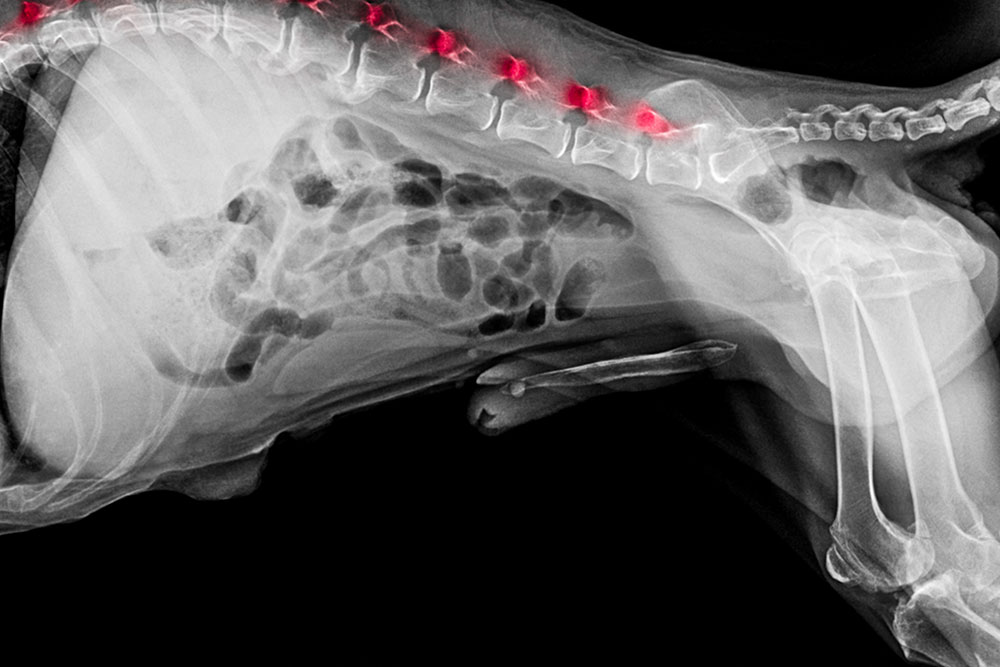
IVDD, or intervertebral disc disease, occurs when one or more of the cushioning discs between the vertebrae of the spine degenerates, bulges, or ruptures. When disc material presses against the spinal cord or the nerve roots branching off it, the result is pain, neurological dysfunction, or both. The severity depends on how much material has herniated and how much compression exists.
There are two main types. Type I involves sudden, forceful disc herniation, common in chondrodystrophic breeds, dogs bred with shortened limbs and long bodies, where disc tissue calcifies early. Type II involves a slower, gradual bulging of disc tissue, more often seen in larger breeds and older dogs.
Breeds Most at Risk
While any dog can develop IVDD, certain breeds are significantly predisposed:
- Type I prone: Dachshunds, French Bulldogs, Beagles, Cocker Spaniels, Shih Tzus, Basset Hounds, Lhasa Apsos
- Type II prone: German Shepherds, Labrador Retrievers, Dobermans, larger mixed breeds in middle to older age
Warning Signs to Watch For
IVDD symptoms vary widely depending on where in the spine the affected disc is located and how severe the compression is. Signs of pain and nerve damage include:
- Reluctance to jump, climb stairs, or be picked up
- Hunched back or neck, or holding the neck stiffly
- Yelping or crying when touched along the spine
- Wobbly gait in the back legs, or stumbling
- Dragging one or both back feet, or knuckling (walking on the top of the paw)
- Weakness progressing to inability to support weight on the hind end
- Loss of bladder or bowel control
One quick test you can do at home: the “paw placement” test. With your dog standing, flip their paw over like they are standing on the top of it. They should automatically adjust their foot to stand on their paw pad like normal. This is called “conscious proprioception“, basically showing that their nerves are working well enough to recognize that their foot is not in the right position. If they don’t flip it over on their own, come in immediately. That is a signal that nerve damage has already occurred.
These signs exist on a spectrum. Early signs are easy to miss or attribute to a muscle strain. Signs in the lower half of that list require same-day evaluation, and some require emergency care tonight.
Why Timing Matters So Much with IVDD
IVDD is one of those conditions where hours genuinely matter. Spinal cord compression triggers a cascade of injury that worsens the longer it continues. A dog who is weak but still walking has a meaningfully better prognosis than one who has lost deep pain sensation in the hind limbs, and that transition can happen in under 24 hours in severe cases.
For dogs showing earlier signs, including pain, reluctance to move, mild wobbliness, or sudden behavioral changes suggestive of spinal discomfort, we are the right place to start. We can perform a neurological examination, take digital X-rays, provide initial pain management, and give you a clear read on whether this situation requires same-day referral for advanced imaging and surgery or whether conservative management is the right call. Getting that clarity early is often the difference between a dog who recovers well on medical management and one who deteriorates because the window for intervention was missed.
Medical Management vs. Surgery: How the Decision Gets Made
The choice between medical management and surgical decompression is one of the most consequential decisions in IVDD care. It is guided by neurological grade, how quickly signs are progressing, how long symptoms have been present, and the results of advanced imaging. Part of what we do is help you and your regular vet or a surgical specialist have that conversation with the most complete information possible.
IVDD is classified in five stages that reflect how severely the spinal cord is being affected:
- Stage 1: Pain only, no coordination problems. The dog walks normally but may be stiff or hold their head low.
- Stage 2: Still walking, but with proprioceptive deficits (paw knuckling, wobbling). Moderate to severe pain.
- Stage 3: Able to move the legs but cannot stand or walk independently. One or more paws may drag.
- Stage 4: Paralyzed and unable to walk, but deep pain sensation is still present. Bladder and bowel control may be lost.
- Stage 5: Paralyzed with no deep pain sensation in the feet. This is the most severe stage, and timing is critical.
Medical management is appropriate for dogs at stages 1 and 2 who have not progressed rapidly. It involves strict cage rest for four to six weeks, anti-inflammatory medication, and pain management. Short leash walks are not enough. True confinement is what allows the disc to stabilize and reduces the risk of re-herniation. Medical management has good outcomes in appropriately selected cases, but it requires genuine owner commitment to the rest protocol, started promptly rather than waiting to see how things develop.
Surgery is recommended at stage 3 and above, when neurological deficits are moderate to severe, when a dog is not responding to conservative management, or when a dog has lost the ability to walk. At stage 3, surgical success rates approach 100%; by stage 5, that window narrows considerably and surgery becomes an emergency requiring action within the first 24 hours of onset. The prognosis drops significantly if surgery is delayed beyond 24 to 48 hours from the onset of paralysis, which is one more reason that early evaluation gives your dog the most options.
We do not perform IVDD surgery, but we can tell you clearly whether surgery is likely to be needed, how urgently, and where to go. We coordinate transfer to the appropriate facility with a neurosurgeon, and ensure your family veterinarian receives a complete record of our findings so nothing falls through the cracks.
How We Help Before Surgery Becomes Necessary
A significant number of dogs with early or moderate IVDD do not end up needing surgery, particularly when conservative management is started promptly and followed through correctly. Getting to us early, before mild signs progress to severe ones, genuinely matters.
When a dog comes in with early IVDD signs, here is what we can do that makes a real difference:
- Confirm what you are dealing with. A proper neurological exam and X-rays rule out other causes of back pain and establish a baseline grade for the neurological deficits present, which determines whether medical management is appropriate or whether surgical evaluation should happen now.
- Start effective pain control. Dogs in significant pain move erratically, increasing the risk of further disc herniation. Getting ahead of the pain reduces that risk and keeps the dog calmer during the critical early rest period.
- Give you a concrete plan. We walk through exactly what confinement should look like, what activity to eliminate, what warning signs mean the situation is escalating, and when to come back.
- Catch progression early. If signs are worsening despite appropriate rest and medication at recheck, that is the moment to escalate to surgical consultation, not a week later.
Modern Therapies Supporting Spinal Recovery
Laser Therapy for Pain and Inflammation
Laser therapy uses specific wavelengths of light to reduce inflammation, ease pain, and stimulate cellular repair in damaged tissues. It is non-invasive, well-tolerated by most dogs, and commonly used alongside conservative management or as part of post-surgical recovery. For dogs recovering from IVDD, regular laser sessions can accelerate healing, improve comfort during the rest period, and help reduce reliance on systemic pain medications as recovery progresses.
Stem Cell Therapy and Regenerative Medicine
Stem cell therapy represents a newer approach to spinal recovery, using the body’s own regenerative cells to reduce inflammation and promote healing in damaged tissue. Research on stem cell therapy for dogs with IVDD has shown promising results for restoring strength and mobility after significant disc events. While not appropriate for every case, it is worth raising with a specialist as part of a comprehensive recovery plan.
Recovery and Rehabilitation: What Healing Actually Looks Like
Cage Rest and Controlled Activity
Cage rest for spinal cord injury is not just a suggestion; it is treatment. A small, comfortable crate that limits the dog to standing, lying, and turning around is appropriate. For medically managed dogs, the most common reason treatment fails is inadequate rest. True confinement is what allows the disc to stabilize, and pain medications are adjusted based on comfort and progress throughout. We will walk you through the specific duration and the schedule for gradually reintroducing movement based on your dog’s grade and response.
Rehabilitation to Rebuild Strength and Coordination
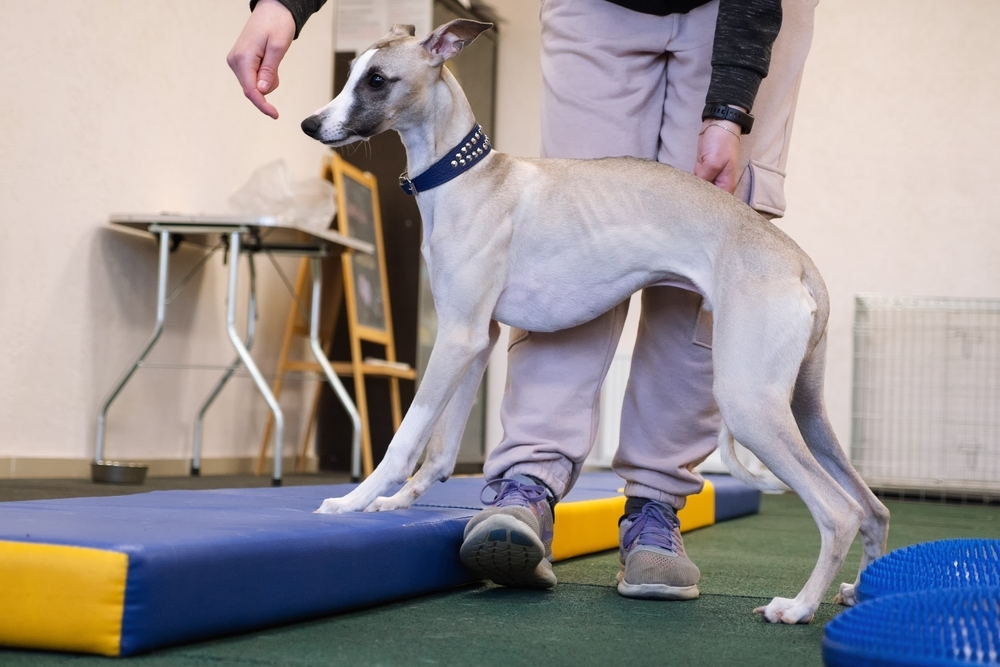
Physical rehabilitation plays a critical role in recovery, particularly for dogs with significant neurological deficits. Rehabilitation for common neurological conditions includes guided exercises to rebuild muscle mass lost during confinement, underwater treadmill work that allows weight bearing with reduced joint stress, assisted standing and walking practice, and range of motion techniques. Professional rehabilitation significantly improves outcomes and shortens recovery compared to rest alone.
Living Well with Partial Paralysis
Some dogs do not regain full mobility after IVDD, particularly those with severe or long-standing spinal cord damage. This is not a hopeless situation. Many dogs with partial or complete hind limb paralysis live full, engaged lives with appropriate support:
- Wheelchairs and carts that allow active movement and daily exercise
- Regular assisted bladder expression when voluntary control has not returned
- Careful positioning and padded bedding to prevent pressure sores
- Physical therapy to maintain muscle tone and joint health
Dogs adapt remarkably well when their environment is set up to meet them where they are. Dodger’s List is a great resource for all things IVDD related, including answers to the dozens of questions that come up when caring for a dog with partial or complete paralysis.
Reducing the Risk of Recurrence
Once a dog has had one IVDD episode, the risk of another is elevated, particularly in predisposed breeds. Strategies that meaningfully reduce recurrence:
- Weight management. Every extra pound increases mechanical stress on the spine. Maintaining a lean body condition is one of the most impactful things owners can do.
- Ramps and steps. Home modifications to decrease repetitive jumping on and off furniture, beds, and into cars removes a significant mechanical risk for dogs with long spines.
- Harnesses over collars. A front or back harness distributes force more safely than a neck collar during walks, particularly for dogs who pull.
- Core strengthening. Low-impact exercises that support the muscles around the spine provide some protective benefit against future disc events.
- Regular veterinary monitoring. Catching subtle early signs before they progress gives more treatment options and a better prognosis.
Frequently Asked Questions About IVDD
Can IVDD resolve on its own without treatment?
Mild cases managed with strict rest sometimes improve, but waiting it out without proper confinement and veterinary guidance frequently results in progression. Professional evaluation is always worth pursuing when signs appear.
How do I know if my dog needs surgery?
The decision is based on neurological grade, rate of progression, and imaging findings. Dogs who are losing function rapidly, cannot walk, or have lost bladder and bowel control are surgical candidates. A proper neurological assessment is the only reliable way to determine this.
How long does IVDD recovery take?
Medically managed dogs are typically on strict rest for four to six weeks. Post-surgical recovery generally involves four to six weeks of restricted activity, with rehabilitation extending beyond that. Full neurological recovery in severe cases can take months.
My Dachshund seems fine between episodes. Should I do anything proactively?
Yes. Ramps, weight management, no jumping, and regular spinal monitoring make a real difference in how frequently episodes occur and how severe they are when they do.
What if my dog deteriorates at night when my regular vet is closed?
We are open until 9 PM every day of the week. For acute deterioration, we can evaluate, stabilize, and determine whether same-night transfer to an emergency facility is needed.
Getting Your Dog Evaluated Without the Wait
IVDD does not announce itself clearly, and the difference between a manageable recovery and an irreversible outcome can come down to hours. If something feels urgent, we want to see your dog. Walk in any day of the week, or check in online to get a dog with back or neck signs evaluated today.



Leave A Comment